Architecture
Introduction and Goals
Quizzard of Oz is a web-based quiz application for solo practice and real-time competitive play. The product combines a Next.js browser frontend, a FastAPI backend, Keycloak-based identity, PostgreSQL persistence, a local trivia-question cache, and WebSocket-driven battle sessions.
The project was developed in the Software Quality and Security module at Technische Hochschule Rosenheim.
Requirements Overview
Requirement |
Current Implementation |
|---|---|
Practice quiz |
The frontend page |
Ranked battle |
Authenticated users enter the ranked queue through |
Shared battle UI |
The |
Leaderboard |
Public leaderboard and search pages call |
Authentication |
Browser login uses Keycloak OIDC/PKCE through |
WebSocket authorization |
Queue and battle WebSockets validate the backend session cookie during the handshake before accepting the connection. |
Ranking |
The backend stores one ranking per user, applies Elo updates with |
Question supply |
The backend retrieves questions from The Trivia API |
Deployment for local and CI use |
Docker Compose starts PostgreSQL, Keycloak, backend, and frontend. GitHub Actions build, test, analyze, and publish container images. |
Quality Goals
Priority |
Quality Goal |
Concrete Scenario |
|---|---|---|
1 |
Responsive gameplay |
During an active battle, both players receive question, answer acknowledgement, reveal, round result, and game-over events without waiting for a live trivia request on every question. |
2 |
Security |
Ranked queue and battle sockets reject clients without a valid backend session cookie. Backend login accepts only Keycloak tokens that can be verified through the realm JWKS. |
3 |
Maintainability |
A developer traces a bug from the API endpoint through the service layer to the database without crossing into unrelated modules, because routing, business logic, and persistence are kept in separate layers. |
4 |
Reliability |
If the external trivia provider is unavailable or returns invalid data, the backend maps the failure to explicit 502/503 responses or aborts the battle with a controlled WebSocket close. |
5 |
Testability |
Backend pytest tests cover auth, ranking, trivia, WebSocket auth, matchmaking, and battle logic. Frontend Vitest, architecture, security, and Playwright tests cover UI flows and boundaries. |
Stakeholders
Stakeholder |
Expectations |
Architectural Interest |
|---|---|---|
Players |
Fast quiz interaction, clear ranking, reliable login, stable battle state. |
Low latency, fair scoring, predictable session behavior, useful error states. |
Development team |
Small-team codebase that can be changed safely. |
Clear modules, explicit interfaces, repeatable local setup, CI feedback. |
Reviewers and instructors |
Evidence that implementation and documentation reflect course quality and security goals. |
Traceable requirements, decision records, risk visibility, test coverage. |
Operators or maintainers |
Simple service startup and diagnosable failures. |
Docker Compose, health checks, environment variables, logs, persistence boundaries. |
Constraints
Technical Constraints
Constraint |
Architectural Impact |
|---|---|
Frontend uses Next.js 16, React 19, TypeScript, Tailwind CSS v4, Zustand, and |
UI behavior is organized around App Router pages, client components, browser WebSockets, and environment-provided public URLs. |
Backend uses Python 3.12, FastAPI, Uvicorn, SQLAlchemy 2, Pydantic, PyJWT, httpx, and PostgreSQL. |
HTTP APIs, WebSocket endpoints, validation, ORM models, and service classes form the backend architecture. |
Authentication is delegated to Keycloak 26. |
The application does not store user passwords. It stores Keycloak subject identifiers and backend sessions. |
Application sessions are backend-managed. |
Login creates a |
Battle state is held in backend process memory. |
Active matches, queue entries, timers, WebSocket connections, round scores, and selected categories are lost on backend restart and cannot be shared across multiple backend replicas without further work. |
PostgreSQL schema is created through |
No migration tool is visible. Schema changes require extra discipline and are a technical debt item for production use. |
Trivia questions come from an external provider. |
The backend must handle upstream timeouts, retryable status codes, invalid payloads, and cache refill limits. |
Organizational Constraints
Constraint |
Architectural Impact |
|---|---|
The project is built by a small course team. |
The system remains a modular monolith plus frontend rather than many independently deployed services. |
The project has no dedicated operations budget. |
The stack relies on open-source technologies and simple container orchestration. |
CI and quality gates are part of the project workflow. |
Changes should keep pytest, Vitest, Playwright, architecture tests, SonarCloud, and Docker builds working. |
Documentation is published via Read the Docs. |
Markdown must remain compatible with Sphinx/MyST and the existing Furo documentation setup. |
Legal and Regulatory Constraints
Constraint |
Architectural Impact |
|---|---|
User-related data is stored in PostgreSQL. |
The system stores only data needed for login, sessions, rankings, and match history: Keycloak subject, email, username, sessions, rankings, and match results. |
Session data is security-sensitive. |
Cookies must be HttpOnly, appropriately scoped, and secure in production. Logs must avoid tokens, passwords, and session identifiers. |
Keycloak is self-hosted open-source software. |
The realm configuration in |
The Trivia API has external terms and availability limits. |
Caching and retry settings reduce repeated upstream calls. Commercial or heavier use would require checking the provider plan and terms. |
Open-source dependencies have license obligations. |
Dependency manifests and lock files must remain reviewable before adding libraries. |
Context and Scope
Business Context
Actor or System |
Interaction with Quizzard of Oz |
|---|---|
Guest player |
Uses public pages such as the landing page, practice mode, and leaderboard without a backend login session. |
Registered player |
Logs in through Keycloak, receives a backend session, enters ranked battle, and appears in rankings after match results. |
Keycloak |
Provides identity through OIDC/PKCE and exposes JWKS for backend token verification. |
The Trivia API |
Supplies multiple-choice questions that the backend normalizes and caches. |
PostgreSQL |
Stores application users, backend sessions, rankings, cached questions, and match result history. |
GitHub Actions |
Runs build, test, E2E, architecture, SonarCloud, Docker, and diagram-generation workflows. |
SonarCloud |
Receives backend and frontend coverage reports and reports quality metrics. |
Read the Docs |
Builds and publishes Sphinx documentation. |
GHCR |
Receives backend and frontend Docker images from the Docker workflow. |
Technical Context
Interface |
Mechanism |
Data Exchanged |
|---|---|---|
Browser to frontend |
HTTP/HTTPS |
Next.js pages, JavaScript, CSS, static assets, manifest, favicon. |
Frontend to backend REST |
HTTP JSON through |
Login, refresh, logout, practice questions, answer checks, trivia batches, rankings, leaderboard search. |
Frontend to backend queue |
WebSocket |
Session-cookie-authenticated matchmaking. Messages include |
Frontend to backend match |
WebSocket |
Live match protocol: category picking, questions, answer submission, answer acknowledgement, |
Frontend to Keycloak |
OIDC Authorization Code + PKCE via |
Login, registration, access token acquisition, logout redirect. |
Backend to Keycloak |
HTTPS JWKS lookup |
Public keys for verifying Keycloak access tokens. |
Backend to PostgreSQL |
SQLAlchemy over PostgreSQL protocol |
CRUD for users, sessions, rankings, cached questions, and match results. |
Backend to The Trivia API |
HTTPS JSON via httpx |
|
Configuration |
Environment variables and Docker build args |
Database credentials, CORS origins, session cookie settings, Keycloak URL/realm/client ID, Trivia API settings, API base URL, build commit. |
System Boundary
Quizzard of Oz contains the Next.js frontend and FastAPI backend. PostgreSQL and Keycloak are part of the local/container deployment but remain separate runtime services. The Trivia API, GitHub Actions, SonarCloud, GHCR, and Read the Docs are external supporting systems.
PlantUML sources live in docs/c4 and are the authoritative diagram definitions. Generated SVGs live in docs/images and are regenerated by the plantuml.yml workflow. If a rendered SVG lags behind a PlantUML source change, treat the source file and the prose in this document as authoritative.
System Context Diagram
Purpose: show the users, the Quizzard of Oz system boundary, and external runtime/supporting systems.
Main elements: guest player, registered player, development team, reviewers, operators, Quizzard of Oz, Keycloak, PostgreSQL, The Trivia API, GitHub Actions, SonarCloud, GHCR, and Read the Docs.
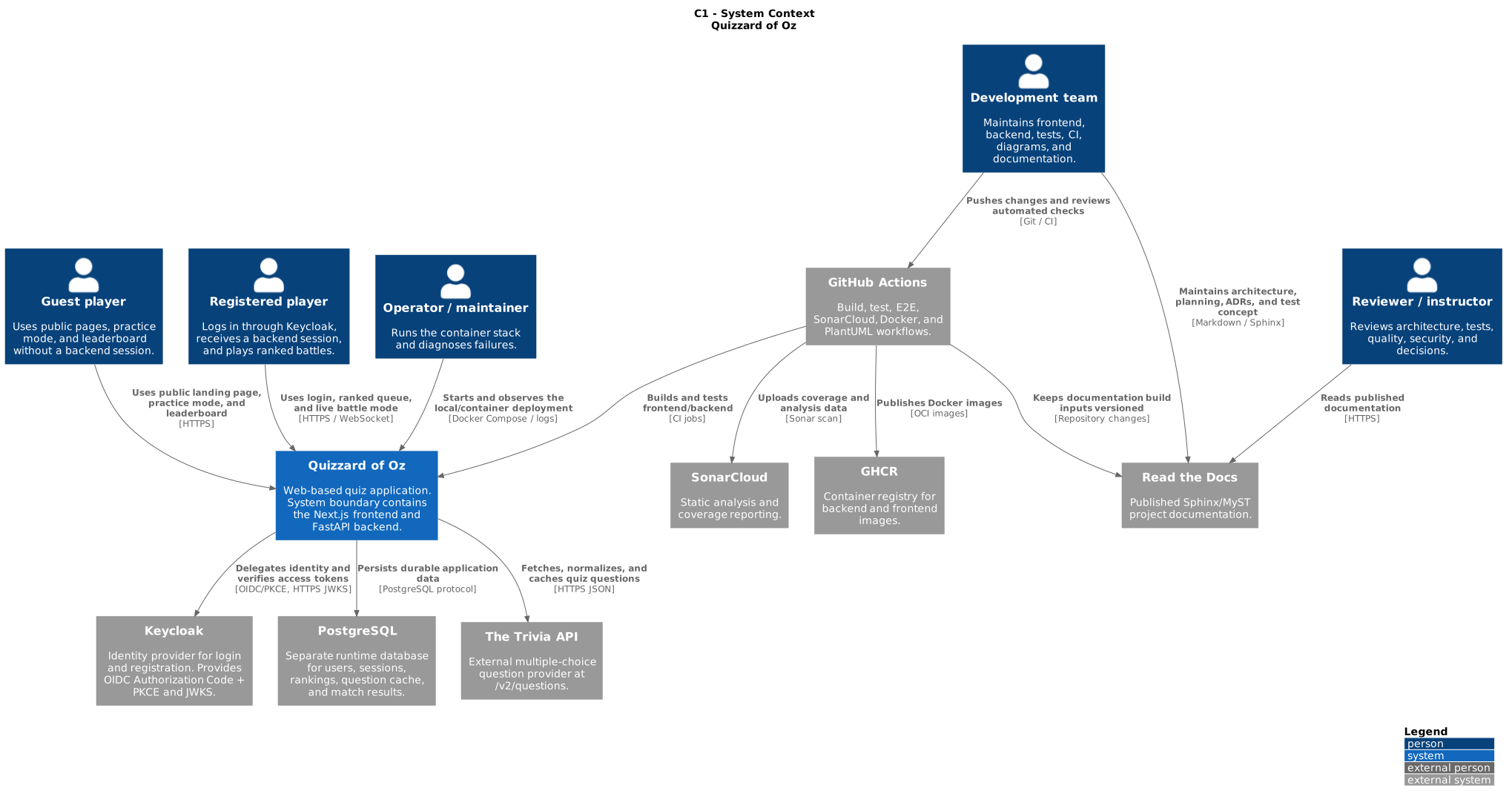
Source: docs/c4/c1_context.puml
The context view makes identity delegation, external question supply, persistent storage, and CI/documentation infrastructure explicit. Quizzard of Oz contains the Next.js frontend and FastAPI backend; PostgreSQL and Keycloak are shown as separate runtime services.
Solution Strategy
Keep the product as a small modular web system: one Next.js frontend, one FastAPI backend, one PostgreSQL database, and one Keycloak identity service.
Use REST APIs for request/response interactions such as login, refresh, practice questions, answers, rankings, and leaderboard search.
Use WebSockets for battle queue and match runtime events because both players need low-latency, bidirectional state updates.
Delegate identity to Keycloak and keep application sessions in PostgreSQL-backed HttpOnly cookies so frontend JavaScript does not need direct access to the backend session identifier.
Keep battle orchestration in
BattleManagerand matchmaking inMatchmakingService; both are process-local and protected with asyncio locks for concurrent WebSocket actions.Cache normalized trivia questions in PostgreSQL to decouple most gameplay from live upstream calls and reduce latency/rate-limit pressure.
Use SQLAlchemy models and CRUD repositories for persistent data access; use service classes for game, trivia, ranking, and auth-related behavior.
Keep quality feedback automated through backend pytest, frontend Vitest, architecture tests, security tests, Playwright E2E tests, SonarCloud, and Docker workflows.
Building Block View
Level 1 — Whitebox Overall System
Building Block |
Responsibility |
Main Technologies |
|---|---|---|
Next.js frontend |
Player UI, route handling, Keycloak client initialization, auth state, theme state, REST clients, WebSocket clients, battle rendering. |
Next.js, React, TypeScript, Zustand, keycloak-js, Axios, Tailwind CSS. |
FastAPI backend |
REST API, WebSocket server, auth/session handling, matchmaking, battle state machine, ranking, trivia integration, persistence access. |
FastAPI, Uvicorn, SQLAlchemy, Pydantic, PyJWT, httpx, websockets. |
PostgreSQL database |
Persistent data for users, sessions, rankings, question cache, and match result history. |
PostgreSQL 18 in Docker Compose, PostgreSQL 16 in CI E2E service. |
Keycloak |
Identity provider and realm configuration for login/registration. |
Keycloak 26.2.5, imported |
Trivia provider |
External question source. |
The Trivia API |
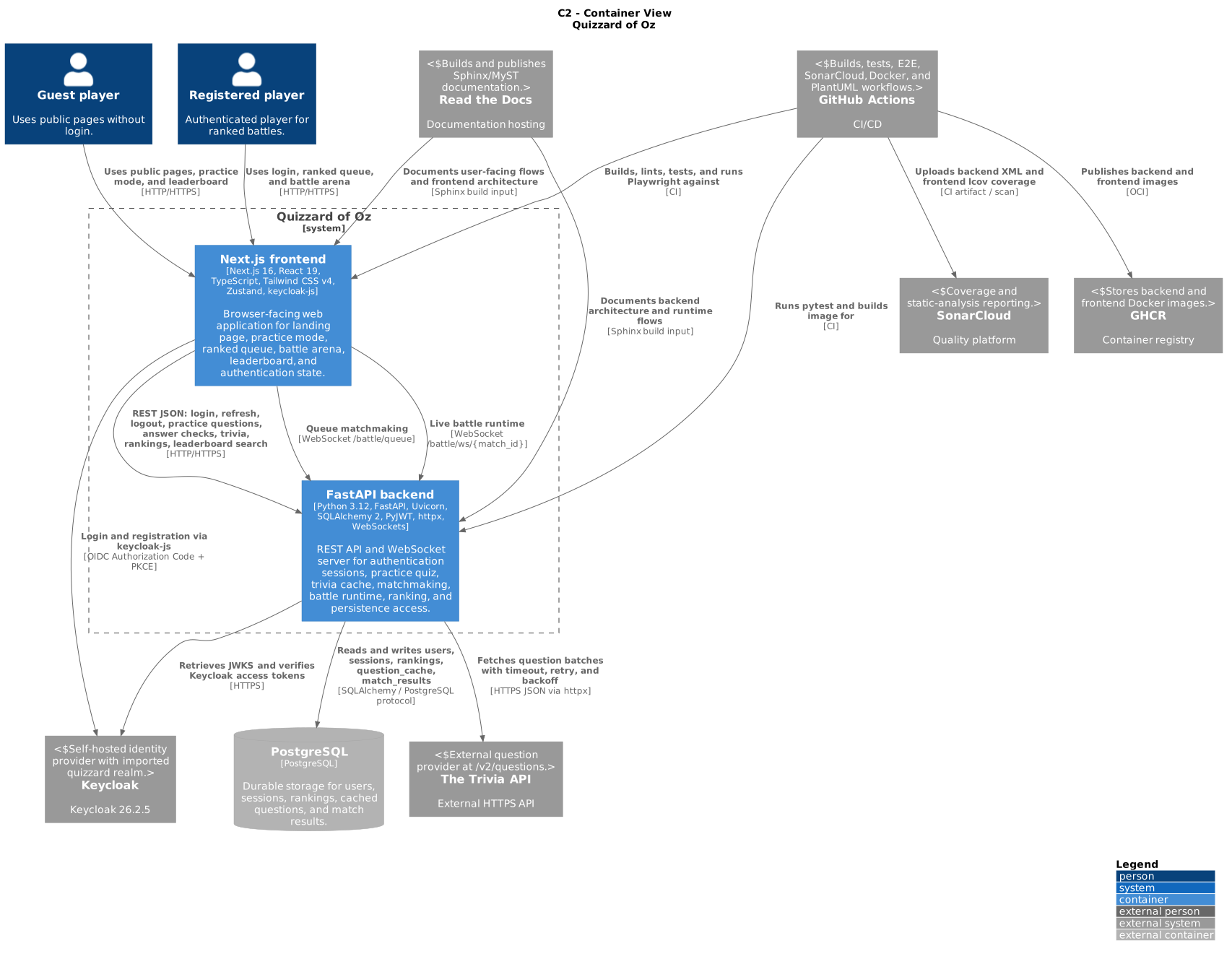
Source: docs/c4/c2_container.puml
Purpose: show the deployable/executable units and their runtime communication.
Main elements: Next.js frontend and FastAPI backend inside the Quizzard of Oz boundary; PostgreSQL and Keycloak as separate runtime services; The Trivia API and supporting CI/documentation systems as external systems.
The container view separates public browser delivery, REST JSON calls, queue WebSockets, battle WebSockets, OIDC/PKCE login, JWKS token verification, SQLAlchemy/PostgreSQL persistence, and outbound Trivia API access.
Frontend Building Blocks
Block |
Implementation |
Responsibility |
|---|---|---|
App layout |
|
Wraps the app in theme and Keycloak providers, renders navigation, validates required Keycloak public config. |
Landing page |
|
Shows product entry, ranked battle CTA, practice CTA, and top 3 leaderboard preview. |
Practice mode |
|
Loads 10 practice questions and submits answer checks to the backend. |
Ranked mode |
|
Gates ranked queue by frontend auth state and opens WebSocket |
Battle arena |
|
Connects to |
Auth client |
|
Initializes Keycloak, exchanges Keycloak token for backend session, refreshes/logout sessions, stores display credential. |
Ranking client |
|
Loads leaderboard and username search results. |
Architecture tests |
|
Enforces no circular dependencies, no component imports from API routes, and no production imports from test files. |
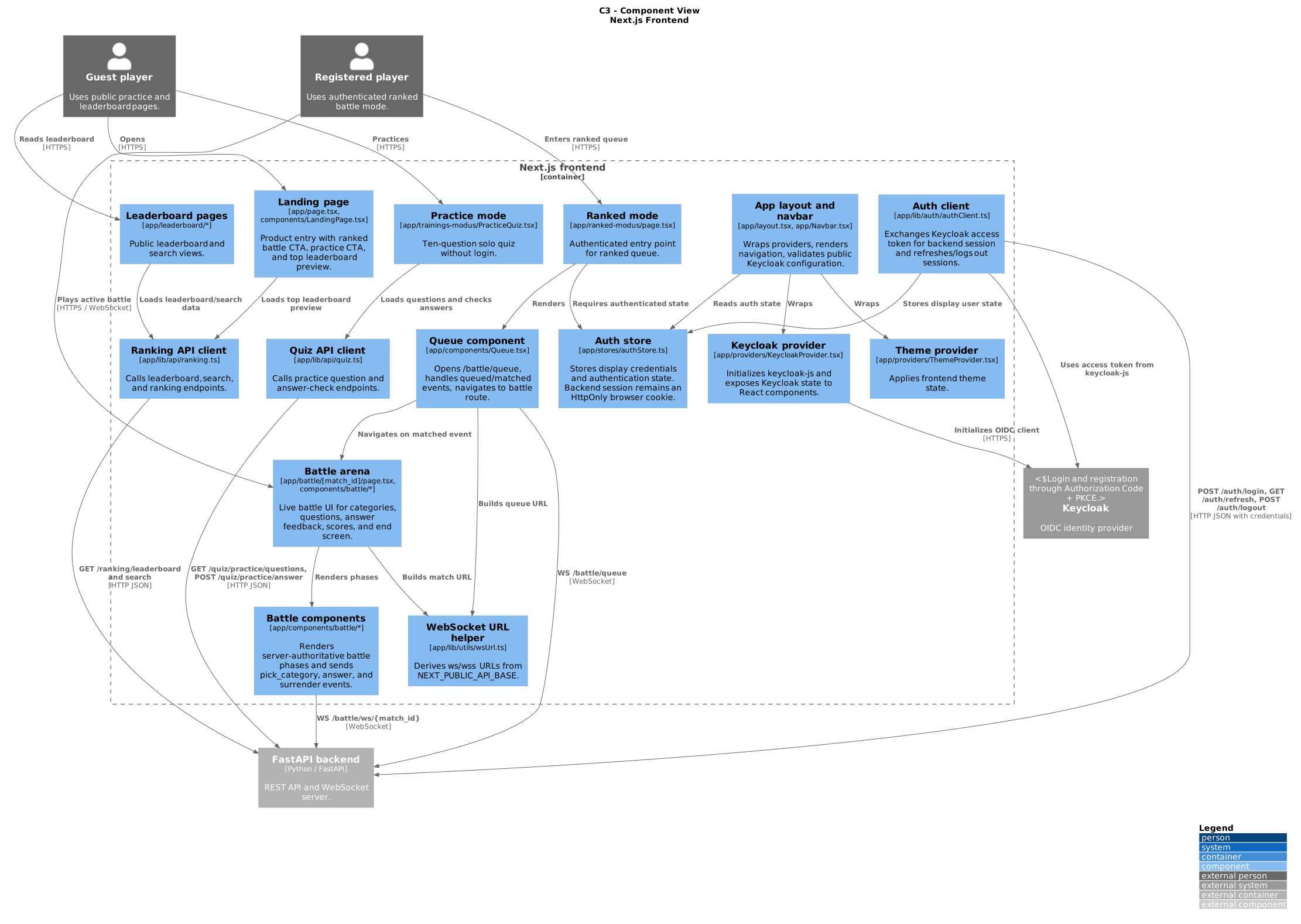
Source: docs/c4/c3_frontend_components.puml
Backend Building Blocks
Block |
Implementation |
Responsibility |
|---|---|---|
Application entry |
|
Creates the FastAPI app, configures CORS, creates DB tables, includes routers, exposes |
Settings |
|
Loads CORS and Trivia settings with Pydantic, loads DB environment variables, creates SQLAlchemy engine/session factory. |
Auth router |
|
Verifies Keycloak bearer tokens, creates users, creates/extends/deletes backend sessions, sets and clears session cookies. Reaches persistence only through |
WebSocket auth |
|
Validates session cookie, session expiry, and user existence before accepting queue or battle sockets. |
User/session services |
|
Thin service wrappers over user and session CRUD so routers honour the enforced |
User router |
|
Creates and reads users through |
Quiz router/service |
|
Serves practice questions and checks practice answers through the trivia service. |
Trivia router/service/client |
|
Parses filters, fetches/cache-refills questions, validates payloads, exposes cached internal question IDs to clients. The client guards upstream calls with timeout, retry/backoff, and a |
Battle router |
|
Exposes queue and battle WebSocket endpoints and delegates to matchmaking/battle services. |
Matchmaking service |
|
Maintains in-memory queue, reads player Elo, matches closest eligible pair, expands allowed Elo delta over wait time, returns a match ID. |
Battle manager |
|
Holds in-memory match state, enforces phases, handles category selection, questions, timers, scoring, surrender, disconnect, forfeit, game over. |
Ranking service |
|
Applies Elo updates, records match results, computes leaderboard pages and shared ranks on ties. |
CRUD/models |
|
Encapsulate SQLAlchemy access to persistent tables. |
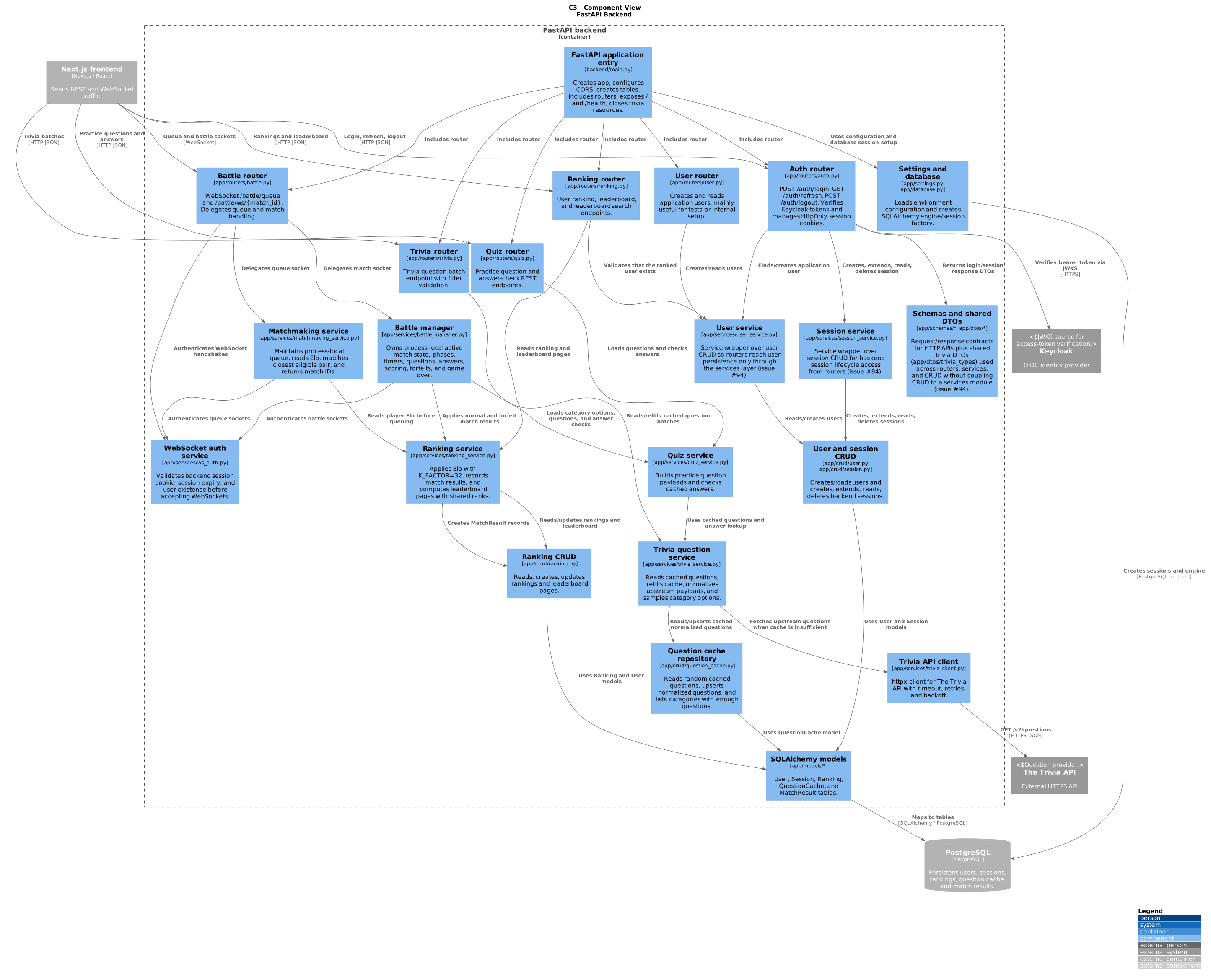
Source: docs/c4/c3_backend_components.puml
Purpose: decompose the FastAPI backend into routers, services, persistence adapters, models, schemas, and external adapters.
Selected container: FastAPI backend.
Main elements: main.py, settings/database, auth/user/quiz/trivia/ranking/battle routers, WebSocket auth, quiz/trivia/matchmaking/battle/ranking services, CRUD repositories, SQLAlchemy models, Pydantic schemas, PostgreSQL, Keycloak, and The Trivia API.
The backend component view highlights the intended layering: routers own inbound protocol handling, services own business rules, CRUD repositories encapsulate database access, models define persistent tables, and external adapters isolate Keycloak and Trivia API communication. This layering (routers > services > crud > models) is enforced by import-linter contracts in backend/.importlinter: routers must reach persistence only through services, and CRUD stays a leaf that imports neither routers nor services (issue #94). See the test concept for the contract details.
Code/Class View: Battle Runtime
Purpose: show the architecturally significant code-level structure around BattleManager, because ranked battles combine authentication, process-local state, WebSockets, timers, question loading, scoring, forfeit handling, and ranking updates.
Selected component: BattleManager and the ranked battle runtime.
Main elements: BattleRouter, WsAuthService, MatchmakingService, QueueEntry, BattleManager, MatchState, player entries stored in MatchState.players, QuizService, TriviaQuestionService, QuestionCacheRepository, RankingService, ranking/session/user CRUD modules, and the persistent User, Session, Ranking, QuestionCache, and MatchResult models.
Source: docs/c4/c4_battle_runtime_code.puml
Important implementation notes visible in the code-level view:
Active queue and battle state is process-local backend memory.
MatchStateis the central runtime state object and protects state mutations with anasyncio.Lock.The current code does not define a separate
PlayerStateclass; connected players are stored as dictionaries inMatchState.players.The repository does not currently contain a dedicated
MatchResultRepository;RankingService.apply_match_resultpersistsMatchResultthrough SQLAlchemy while updating rankings.Persistent state is limited to users, sessions, rankings, cached questions, and match results in PostgreSQL.
Persistent Data Model
Table |
Purpose |
Important Fields |
|---|---|---|
|
Local application user linked to Keycloak identity. |
|
|
Backend-managed application sessions. |
|
|
One ranking row per user. |
|
|
Normalized local copy of Trivia API questions. |
|
|
Match history entry for ranking outcomes. |
|
Active queue entries and active battle state are not stored in PostgreSQL. They live in memory inside MatchmakingService and BattleManager.
Runtime View
Runtime Overview Diagram
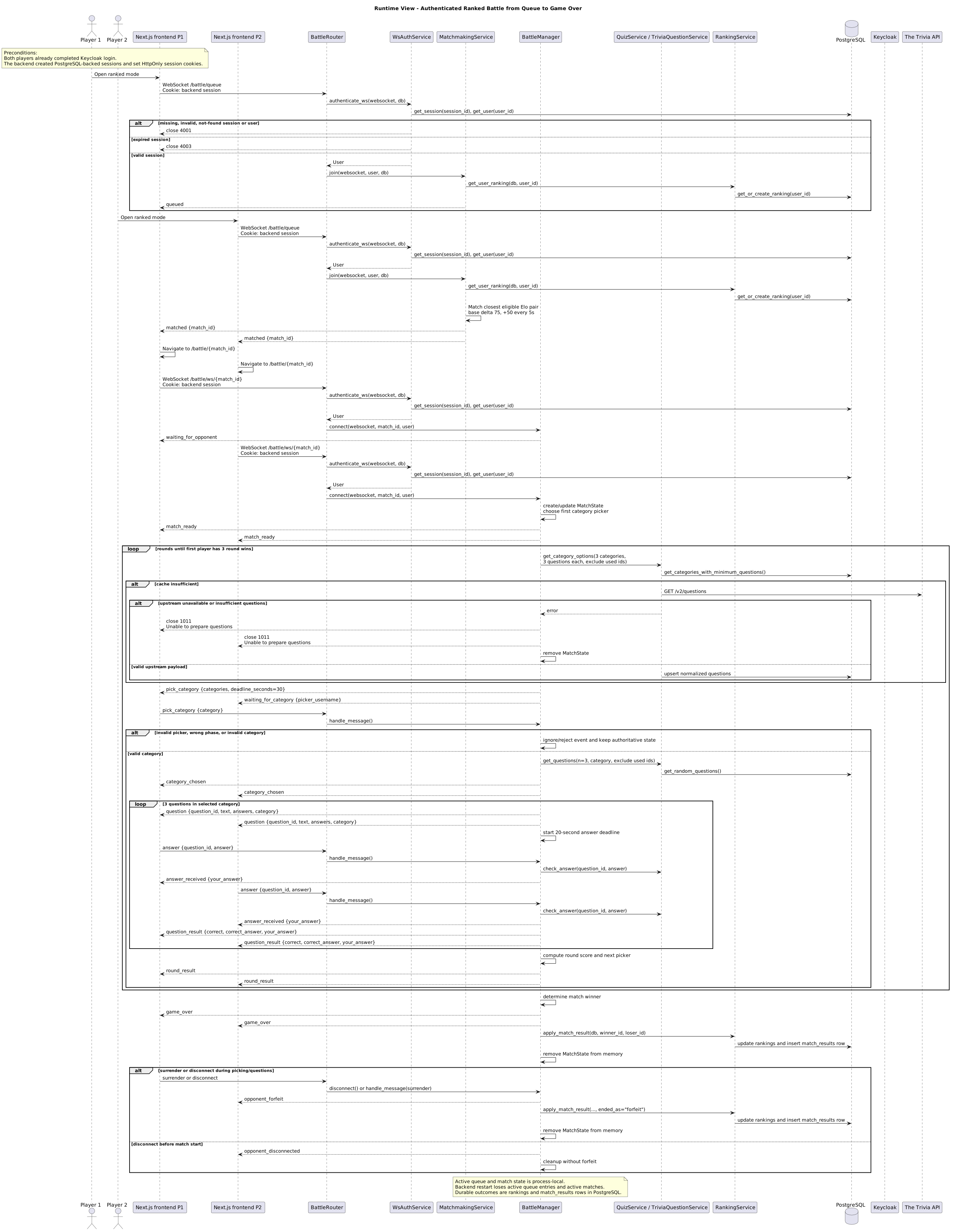
This flow diagram summarizes the ranked battle lifecycle. The detailed runtime descriptions below are authoritative for the currently implemented WebSocket event names and persistence behavior.
Login and Session Flow
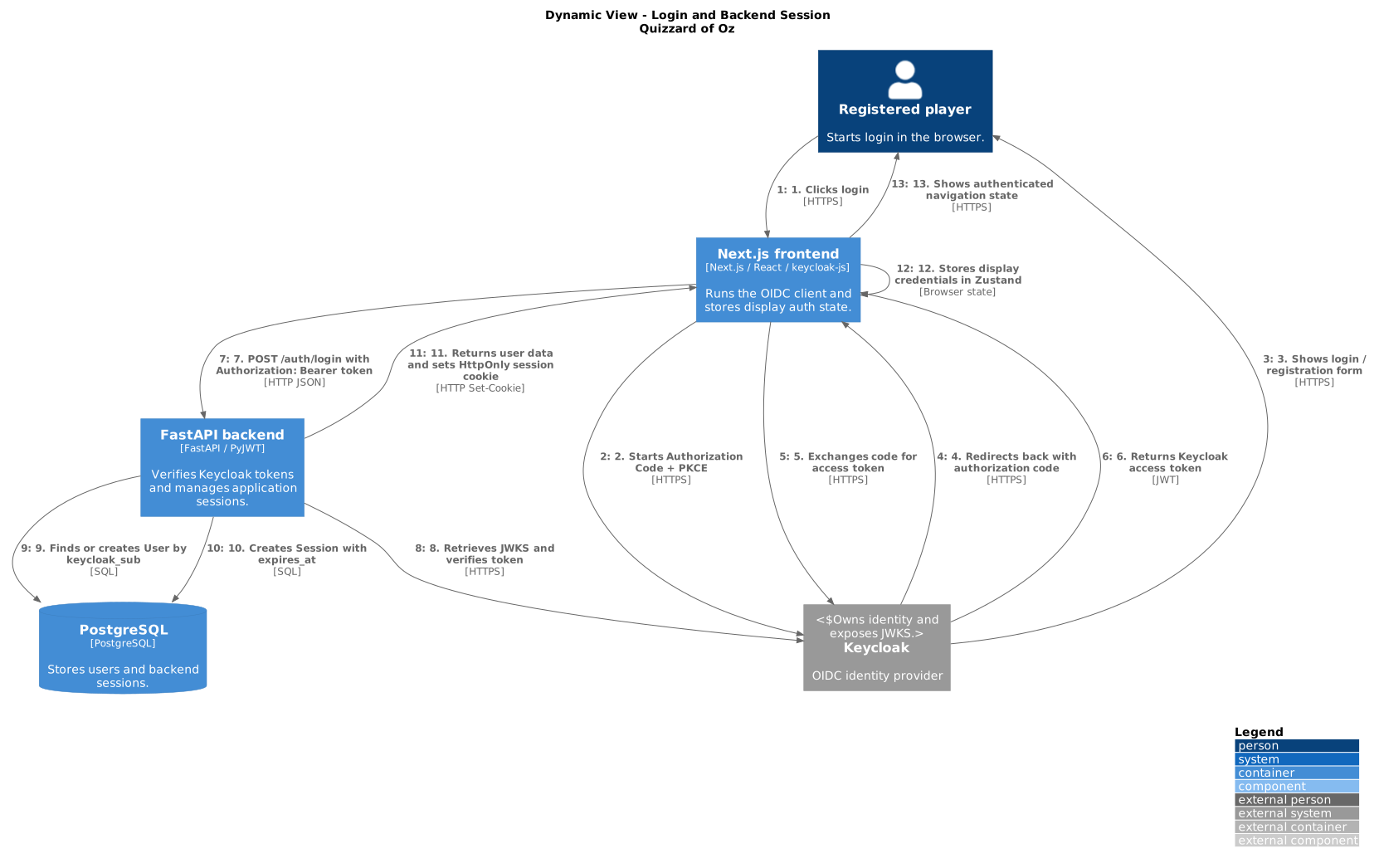
Source: docs/c4/c4_dynamic_login.puml
The user clicks the login button in the frontend.
keycloak-jsruns the Keycloak Authorization Code + PKCE flow.The frontend receives a Keycloak access token.
The frontend calls
POST /auth/loginwithAuthorization: Bearer <token>.The backend verifies the token through Keycloak JWKS and reads the
subclaim.The backend finds or creates a
usersrow usingkeycloak_sub.The backend creates a
sessionsrow withexpires_at.The backend returns username/email/expiry and sets the configured HttpOnly session cookie.
The frontend stores display credentials in Zustand; the session cookie remains browser-managed.
Refresh uses GET /auth/refresh, validates the existing cookie, extends expiry, and returns the same response shape. Logout uses POST /auth/logout, deletes the session if present, and clears the cookie.
Practice Quiz Flow
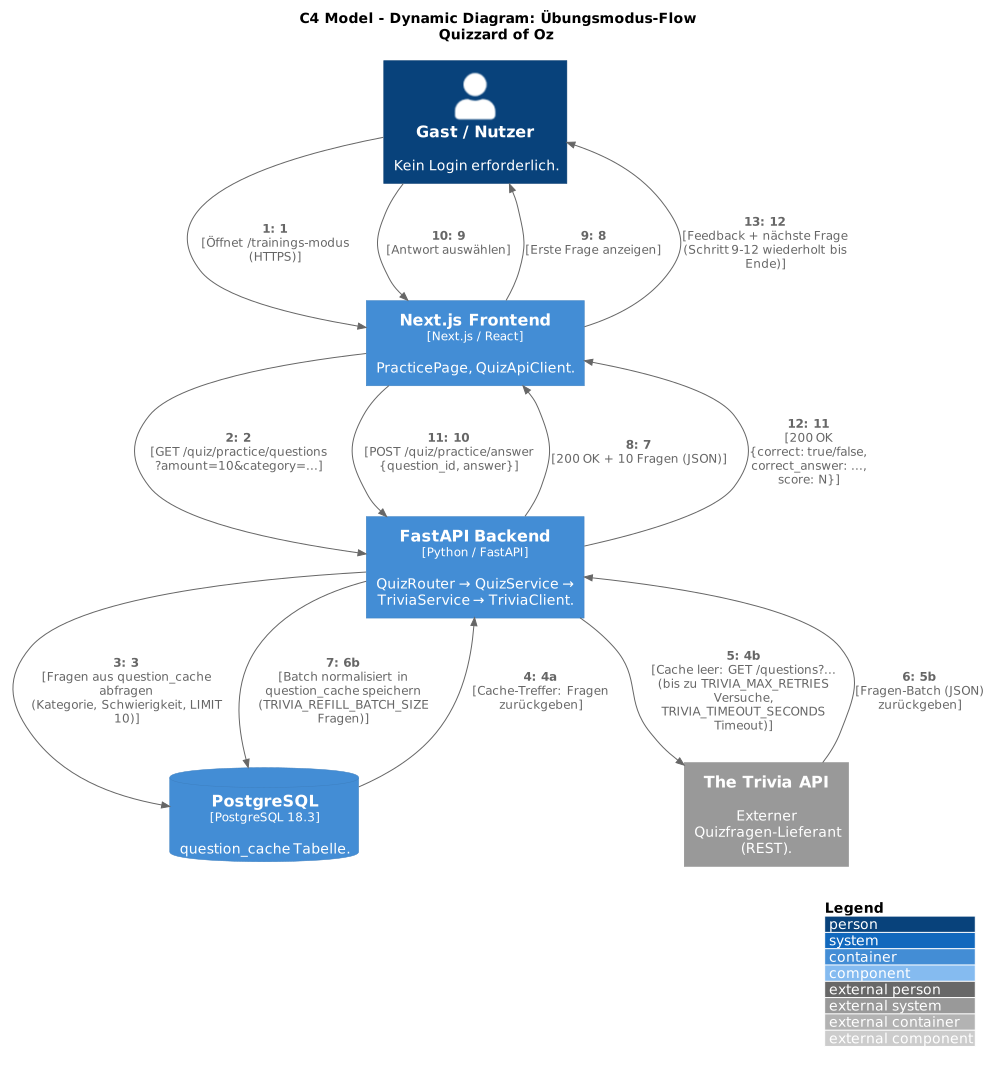
Source: docs/c4/c4_dynamic_practice.puml
PracticeQuizcallsGET /quiz/practice/questions.QuizServicerequests 10 questions fromTriviaQuestionService.The trivia service tries to serve matching cached questions first.
If cache is insufficient,
TriviaApiClientfetches/v2/questions, retries configured transient failures, and the service normalizes valid items.Normalized questions are upserted into
question_cache.The frontend receives question IDs, text, answers, and categories, but not
correct_answer.For each answer, the frontend calls
POST /quiz/practice/answer.The backend compares the answer with the cached correct answer and returns correctness plus correct answer.
Trivia Cache Refill Flow
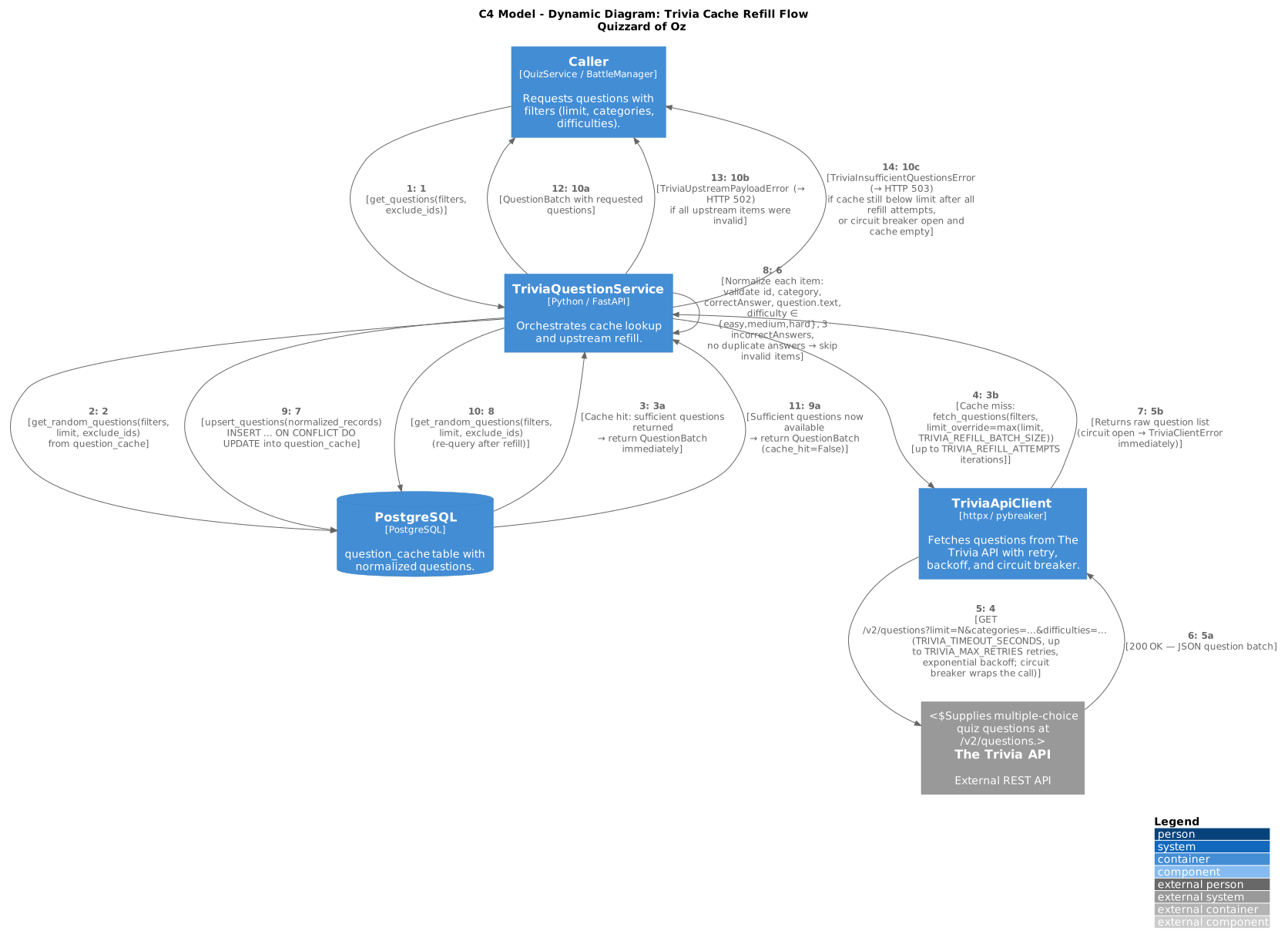
Source: docs/c4/c4_dynamic_trivia_refill.puml
The REST trivia endpoint accepts
limit,categories, anddifficulties.Unsupported query parameters, repeated
limit, invalid limits, unsupported difficulties, andqueryare rejected with 400.The cache repository returns random matching questions, excluding IDs where required by battle flows.
On cache miss, the client fetches from The Trivia API with configured timeout, retry count, backoff, and batch size. A circuit breaker wraps the call: after
TRIVIA_BREAKER_FAIL_MAXconsecutive failed fetches it opens and short-circuits further upstream calls, failing fast untilTRIVIA_BREAKER_RESET_TIMEOUTelapses and it half-opens (closing again on the next success).Invalid upstream payload items are skipped; if all items are invalid, the backend raises a payload error. Non-retryable responses and payload errors do not count toward the breaker, since they are not upstream outages.
If the cache still cannot satisfy the requested limit after refill attempts — or while the breaker is open and the cache is empty — the backend returns 503 for HTTP callers or aborts an active battle setup, now without paying the per-request timeout and retry budget. See ADR 11.
Authenticated Ranked Battle from Queue to Game Over
Scenario: two registered players enter ranked matchmaking, are matched by Elo, play a best-of-five battle, and persist the result.
Trigger: an authenticated player opens the ranked mode and the frontend opens WebSocket /battle/queue.
Preconditions:
Both players have completed Keycloak login.
The backend has verified each Keycloak access token via JWKS.
Each browser has a backend-managed HttpOnly session cookie.
PostgreSQL is reachable for session, ranking, question cache, and match result persistence.
Participants:
Registered players and their browser frontends.
Next.js ranked page,
Queue, and battle arena.FastAPI
BattleRouter.WsAuthService,MatchmakingService,BattleManager,QuizService,TriviaQuestionService, andRankingService.PostgreSQL for sessions, rankings, question cache, and match results.
The Trivia API when cache refill is required.
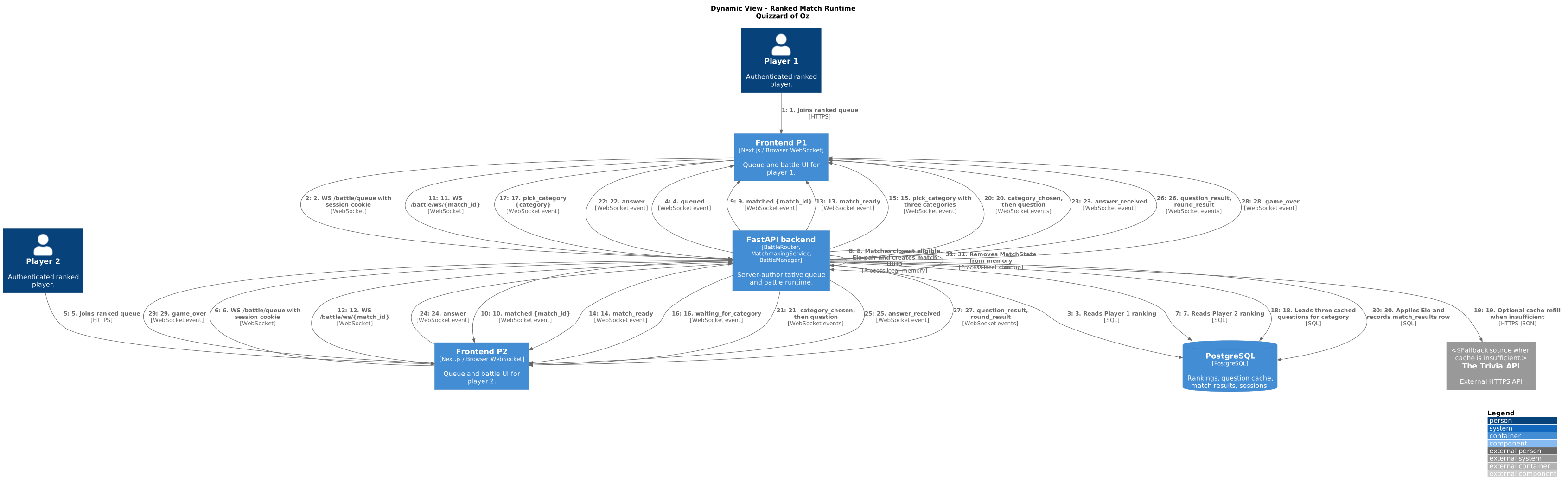
Source: docs/c4/c4_dynamic_match.puml
Sequence diagram source: docs/c4/runtime_ranked_battle.puml
Step-by-step flow:
Player 1 opens WebSocket
/battle/queue; the backend validates the session cookie before accepting the socket.MatchmakingServicereads the player’s ranking, queues the socket with Elo, queue time, and sequence number, and sendsqueuedif no eligible opponent exists.Player 2 opens
/battle/queue; the backend validates the session cookie and reads the player’s ranking.Matching prefers the closest Elo pair. The initial allowed Elo delta is 75 and grows by 50 every 5 seconds.
Both players receive
matchedwith the same match UUID.Both clients navigate to
/battle/{match_id}and open/battle/ws/{match_id}.The backend validates each session cookie again before accepting the battle socket.
The first connected player receives
waiting_for_opponent.When the second player connects,
BattleManagercreates or updatesMatchState, sendsmatch_readyto both players, and randomly chooses the first category picker.At each round, the picker receives
pick_categorywith three categories and a 30-second category deadline; the other player receiveswaiting_for_category.The picker sends
pick_category; the backend ignores invalid picker, wrong-phase, or invalid-category messages and keeps server-authoritative state.The backend loads three questions for the selected category from cache, refilling from The Trivia API if necessary, and tracks used question IDs.
Both clients receive
category_chosen, then eachquestion.The server starts a 20-second answer deadline for each question.
Each player sends
answer; the backend records the answer and replies only to that player withanswer_received.The backend hides the correct answer until both players answer or the timer expires.
Both players receive
question_resultwith correctness, correct answer, their submitted answer, and reveal duration.After three questions, both players receive
round_result.The first player to win 3 rounds wins the best-of-five battle.
Both players receive
game_over.RankingService.apply_match_resultupdates Elo, wins, losses, totals, and inserts amatch_resultsrow.BattleManagerremoves the in-memoryMatchState.
Alternative and error flows:
Missing, invalid, not-found session or missing user: WebSocket close 4001.
Expired session: WebSocket close 4003.
Invalid category picker, wrong phase, or invalid category: backend ignores/rejects the event and keeps authoritative server state.
Trivia upstream payload invalid: controlled upstream payload error.
Insufficient questions or upstream unavailable: HTTP callers receive 503; battle question preparation closes battle sockets with 1011 and a generic reason.
Surrender or disconnect during
pickingorquestions: remaining player receivesopponent_forfeit, rankings update,match_results.ended_as = "forfeit", and in-memory match state is removed.Disconnect before match start: does not count as a forfeit.
Backend restart: active queue entries and active matches are lost because both are process-local memory.
Security considerations:
Keycloak owns identity; the backend owns application sessions.
WebSocket handshakes validate the backend session cookie.
The session cookie must be HttpOnly. Production cookies should also be Secure and scoped to the correct domain/SameSite policy.
Logs must avoid tokens, passwords, and session identifiers.
Consistency and state considerations:
Active battle state is protected by per-match
asyncio.Lockinstances.Matchmaking queue state is protected by its own service lock.
Ranking and match result updates are persisted after normal game over or forfeit.
Completed match results and ranking updates are written to PostgreSQL; active matches are lost on backend restart.
Performance considerations:
WebSockets avoid polling for battle queue and runtime communication.
Cached questions avoid live upstream calls for every battle question.
Batch refill, category sampling, and random cache selection reduce latency and external API pressure.
Leaderboard Flow
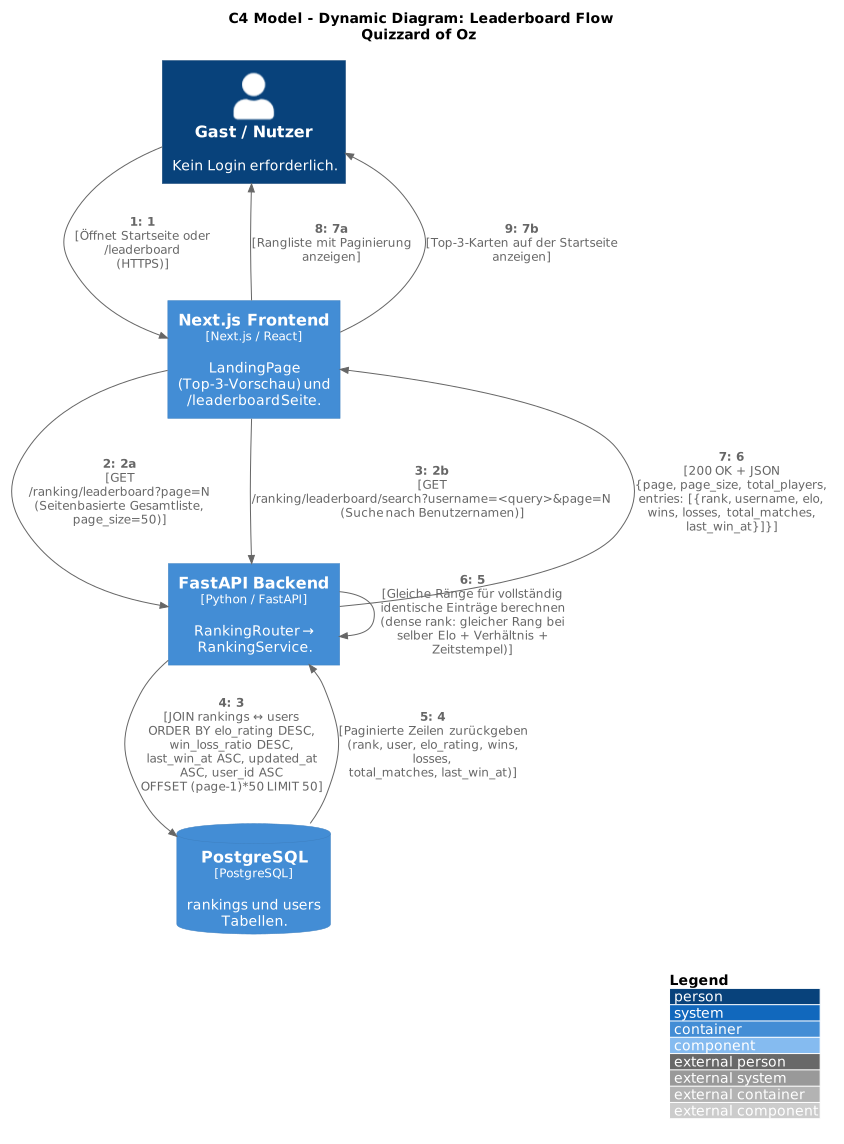
Source: docs/c4/c4_dynamic_leaderboard.puml
The landing page and leaderboard page call
/ranking/leaderboard?page=N.Search calls
/ranking/leaderboard/search?username=<query>&page=N.The backend joins rankings to users, orders by Elo, win/loss ratio, last win time, update time, and user ID.
Fully tied leaderboard entries share the same rank.
The response contains
page,page_size,total_players, and entries with rank, user, Elo, wins, losses, total matches, and last win time.
Diagram Traceability
Trace |
Mapping |
|---|---|
C1 to C2 |
The Quizzard of Oz system from C1 is refined into the Next.js frontend and FastAPI backend containers. Keycloak, PostgreSQL, The Trivia API, GitHub Actions, SonarCloud, GHCR, and Read the Docs remain outside the application boundary. |
C2 to C3 |
The FastAPI backend container is refined into routers, services, CRUD repositories, models, schemas, and external adapters. The frontend container is refined separately into pages, providers, stores, clients, and battle components. |
C3 to C4 |
The backend battle components are refined into |
Runtime view |
The ranked battle runtime uses the C1 registered player, C2 frontend/backend/PostgreSQL/Keycloak/Trivia API, C3 battle/auth/trivia/ranking components, and C4 |
Deployment View
Local Docker Compose Deployment
Service |
Image or Build |
Ports |
Health / Dependency |
|---|---|---|---|
|
|
|
|
|
|
|
TCP health check; backend waits for healthy Keycloak. Imports |
|
Built from |
|
|
|
Built from |
|
Depends on healthy backend. |
The backend image runs as a non-root appuser. The frontend image uses a multi-stage Next.js standalone build and runs as a non-root nextjs user with read-only application files after build.
Configuration
Area |
Variables |
|---|---|
Database |
|
Session cookie |
|
Keycloak |
Backend: |
Frontend/backend routing |
|
Trivia API |
|
Build metadata |
|
CI/CD and Documentation Infrastructure
Workflow |
Responsibility |
|---|---|
|
Installs pnpm dependencies on Node 22 and runs |
|
Installs Python 3.12 dependencies, runs |
|
Runs linting, Vitest coverage, and architecture tests. |
|
Starts PostgreSQL service and Keycloak container, then runs Playwright with frontend and backend web servers. |
|
Downloads coverage artifacts and runs SonarCloud analysis. |
|
Builds and pushes backend/frontend images to GHCR for changes on |
|
Regenerates PlantUML SVG diagrams for |
Read the Docs |
Builds Sphinx documentation from |
Cross-cutting Concepts
Authentication and Sessions
Keycloak owns identity. The backend owns application sessions. The frontend sends the Keycloak access token only to POST /auth/login; after that, session continuity relies on the backend session cookie. HTTP APIs that need the session use browser credentials, and WebSocket handshakes validate the same cookie.
Important session properties are environment-controlled: cookie name, SameSite mode, Secure flag, domain, and expiry. Production deployments should set COOKIE_SECURE=true and a domain appropriate to the deployed frontend/backend origin.
Rate Limiting
Inbound HTTP requests are throttled per IP address using SlowAPI backed by in-memory storage. Limits are enforced at the router level via the @limiter.limit() decorator and a shared Limiter instance from app/rate_limit.py. When a limit is exceeded, the backend returns HTTP 429 with a Retry-After header indicating when the client may retry.
Endpoint |
Limit |
|---|---|
|
5 / minute |
|
30 / minute |
|
30 / minute |
|
60 / minute |
|
60 / minute |
|
30 / minute |
|
60 / minute |
The login endpoint carries the strictest limit to reduce the attack surface for brute-force and credential-stuffing attempts. Rate limit counters are reset per minute and are not persisted across backend restarts.
Real-Time Communication
The battle protocol is server-authoritative. The client sends only category picks, answers, and surrender. The backend owns phase transitions, timers, scoring, round wins, game-over conditions, forfeit handling, and ranking updates.
State Management
Persistent state is stored in PostgreSQL. Transient battle state is held in memory as MatchState objects. asyncio.Lock protects state mutations inside each match, and the matchmaking queue has its own lock.
Ranking
Ranking uses Elo with K_FACTOR = 32. A normal match and a forfeit both update winner and loser ratings, wins/losses, and total matches. Forfeits are distinguished in match_results.ended_as.
Question Caching
The backend stores normalized question content in question_cache and exposes internal cached UUIDs to clients. Upstream question IDs remain internal as external_id. The service filters by category and difficulty, samples random cache entries, avoids reused question IDs during one match, and refills cache batches when needed.
Error Handling
Trivia failures are mapped to explicit HTTP errors: invalid client filters return 400, invalid upstream payloads return 502, upstream unavailability or insufficient questions return 503. Battle question-preparation failures close sockets with internal close code 1011 and a generic reason.
Logging
Backend logging is configured in main.py with timestamped log formatting for uvicorn loggers. Battle and trivia services log operational events without intentionally logging tokens, passwords, or session identifiers.
Frontend Boundaries
Frontend architecture tests enforce:
no circular dependencies in
app/no imports from
app/apiroutes directly intoapp/componentsno production source imports from test files
Testing Strategy
Backend tests cover routers, CRUD, services, settings, authentication, WebSocket auth, matchmaking, ranking, battle state, and trivia integration. Backend architecture tests enforce the routers > services > crud > models layering with import-linter, driven from tests/test_architecture.py and run as a lint-imports step in CI. Frontend tests cover unit, integration, security, architecture, and E2E scenarios. Playwright E2E runs sequentially because shared backend state, fixed test accounts, and WebSocket queues can create cross-test interference.
Architecture Decisions
Detailed ADRs are documented in Architecture Decisions. The most important accepted decisions are:
ADR |
Decision |
Architectural Effect |
|---|---|---|
ADR 1 |
Use Next.js for the frontend. |
App Router pages and React components form the UI architecture. |
ADR 2 |
Use Python with FastAPI for backend services. |
REST and WebSocket interfaces are implemented in one ASGI backend. |
ADR 3 |
Use pnpm for frontend dependency management. |
Frontend CI and Docker builds rely on pnpm lockfile reproducibility. |
ADR 4 |
Use a relational database, specifically PostgreSQL. |
Users, sessions, rankings, cache, and match results are relational tables. |
ADR 5 |
Use SQLAlchemy ORM with Pydantic schemas. |
Data access is encapsulated in models/CRUD while HTTP contracts use typed schemas. |
ADR 6 |
Use WebSockets instead of polling for game communication. |
Battle queue and match runtime use bidirectional WebSocket channels. |
ADR 7 |
Initial Google login. |
Historical decision that was superseded because it made E2E automation and custom registration harder. |
ADR 8 |
Use Keycloak instead of Google OAuth. |
Local/testable login, self-hosted realm import, and backend JWKS verification are part of the architecture. |
ADR 9 |
Use backend-managed HttpOnly sessions. |
Application authorization relies on PostgreSQL-backed sessions and browser-managed cookies. |
ADR 10 |
Keep active matchmaking and battle state process-local. |
Current runtime state is simple and fast, but backend restarts and horizontal scaling require mitigation. |
ADR 11 |
Wrap external Trivia API calls in a circuit breaker. |
Sustained upstream outages fail fast (503 / aborted battle setup) instead of paying the per-request timeout and retry budget. |
Quality Requirements
Quality Scenarios
Quality scenarios follow the Stimulus → System → Response → Metric pattern to make quality goals verifiable.
Quality |
Stimulus |
Response |
Metric |
|---|---|---|---|
Performance |
A player submits an answer during an active battle. |
The backend processes the answer, waits for the opponent or timer, and sends |
Both players receive the result without a live trivia API call; cache hit latency target ≤ 200 ms. |
Performance |
A battle round starts and questions are needed. |
The backend serves questions from the local question cache. |
Questions are served from |
Security |
A WebSocket client connects to |
|
WebSocket close code 4001 returned in 100 % of cases; no queue entry is created. |
Security |
An expired session cookie is sent to |
|
WebSocket close code 4003 returned; no match state is modified. |
Security |
A forged or tampered Keycloak token is sent to |
The backend verifies the token signature through the Keycloak JWKS endpoint. |
HTTP 401 returned in 100 % of invalid-token cases; no user or session row is created. |
Reliability |
One player closes the browser during an active battle. |
The backend detects the disconnect, records a forfeit win for the remaining player, updates rankings, and removes |
Forfeit is persisted in |
Reliability |
The Trivia API is unreachable for an extended period (circuit breaker open). |
The backend fails fast without paying the full timeout and retry budget on each request. |
HTTP 503 returned within ≤ 1 s (no timeout wait); active battle setup closes sockets with code 1011. |
Reliability |
The Trivia API returns malformed payload items. |
Invalid items are skipped individually; if all items are invalid the backend raises a controlled payload error. |
No unhandled exception reaches the caller; HTTP 502 is returned for all-invalid payloads. |
Maintainability |
A developer adds a new backend router that directly imports |
The import-linter |
CI |
Maintainability |
A developer changes battle UI rendering logic. |
Battle phase components in |
No change to |
Testability |
A frontend component accidentally imports from an API route. |
The dependency-cruiser architecture test detects the forbidden import direction. |
|
Operability |
|
All four services start in dependency order: PostgreSQL → Keycloak → backend → frontend. |
All services reach |
Acceptance Checks
Backend tests:
python -m pytest tests -qfrombackend/.Backend architecture contracts:
lint-importsfrombackend/.Frontend lint:
pnpm lintfromfrontend/quizzard-of-oz.Frontend coverage:
pnpm test:coveragefromfrontend/quizzard-of-oz.Frontend architecture tests:
pnpm test:archfromfrontend/quizzard-of-oz.E2E tests:
pnpm test:e2ewith PostgreSQL, Keycloak, backend, and frontend available.Documentation build:
python -m sphinx -b html docs docs/_build/html.
Risks and Technical Debts
Risks
Priority |
Risk |
Impact |
Mitigation |
|---|---|---|---|
HIGH |
Trivia API dependency |
Cache misses fail if upstream is unavailable, invalid, or rate-limited. Circuit breaker (ADR 11) reduces timeout waste, but cannot serve questions that are not yet cached. |
Pre-warm cache on startup, monitor |
HIGH |
In-memory queue and battle state |
Backend restart drops all active matches and queued players without warning. Multiple backend replicas cannot share state. |
Persist active match state to PostgreSQL or introduce a pub-sub layer (e.g. Redis) before horizontal scaling. |
MEDIUM |
Cookie/CORS configuration sensitivity |
Wrong domain, SameSite, Secure, or CORS settings break login silently or weaken cookie security in production. |
Add environment-specific configuration examples, document required production values, add deployment validation step. |
MEDIUM |
Production deployment unspecified |
TLS termination, secret management, automated backups, log aggregation, and scaling strategy are undefined. |
Add a production deployment runbook with Docker Compose overrides or Kubernetes manifests. |
MEDIUM |
Limited observability |
Structured logs exist, but no metrics or distributed tracing are in place. Queue depth, active match count, and circuit breaker state are invisible at runtime. |
Add structured metrics (Prometheus-compatible) for queue length, active matches, upstream failures, and WebSocket close codes. |
LOW |
No database migration tooling |
Schema changes rely on |
Introduce Alembic for versioned migrations and document the rollout procedure. |
Technical Debt
Priority |
Item |
Impact |
Resolution |
|---|---|---|---|
MEDIUM |
User-created route ambiguity |
|
Restrict the endpoint to admin/test contexts or remove it if only test fixtures need it. |
MEDIUM |
Frontend WebSocket env mismatch |
|
Align the variable name in |
LOW |
Documentation drift |
C4 diagram sources and prose in |
Treat |
Glossary
Term |
Definition |
|---|---|
Battle |
A real-time two-player quiz match run through backend WebSockets. |
Battle Arena |
Frontend screen for an active match at |
CORS |
Cross-Origin Resource Sharing rules configured in FastAPI to allow browser calls from configured frontend origins. |
Elo |
Rating algorithm used to estimate player strength and update rankings after matches. |
Forfeit |
Match ending caused by surrender or active-match disconnect; persisted as |
HttpOnly Cookie |
Browser cookie inaccessible to JavaScript; used for backend application sessions. |
JWKS |
JSON Web Key Set served by Keycloak and used by the backend to verify token signatures. |
Keycloak Realm |
Isolated Keycloak configuration namespace. This project imports the |
Match ID |
UUID generated by matchmaking and used by both players to connect to the same battle WebSocket path. |
Match Result |
Persistent record of winner, loser, end reason, and timestamp in |
OIDC/PKCE |
OpenID Connect Authorization Code flow with Proof Key for Code Exchange, used by the browser login flow. |
Question Cache |
PostgreSQL table containing normalized questions fetched from The Trivia API. |
Queue |
In-memory matchmaking list maintained by |
Ranking |
Persistent per-user Elo and win/loss statistics stored in |
Session |
Backend-managed login record in |
The Trivia API |
External provider used by the backend to fetch quiz questions from |
WebSocket Close Code 4001 |
Custom close code for unauthorized or invalid WebSocket sessions. |
WebSocket Close Code 4003 |
Custom close code for expired WebSocket sessions. |